
Authentic and energy-efficient brick cladding - proven
Fill in the form and ask for more information about the possibilities and features!



A brick facade is one of the oldest facade solutions in the construction industry. It is known for its long service life, low maintenance requirements, and timeless appearance. Today, an authentic brick facade can be constructed in several different ways, such as through traditional bricklaying or using brick cladding based on modern fastening techniques.
Although the end result may look identical, the structures differ significantly. We’ll compare a traditional brick-laid facade with BRIX brick-tile cladding from a technical perspective. We’ll examine where the solutions are comparable, where BRIX offers clear advantages, and where traditional brickwork still has its own strengths.
Both the traditional masonry facade and the BRIX brick-tile cladding are constructed from genuine fired bricks. The result is an authentic brick surface whose appearance, color retention, and timeless look will endure for decades to come.
Since both solutions use the same natural material, there is no need to compromise on appearance either.
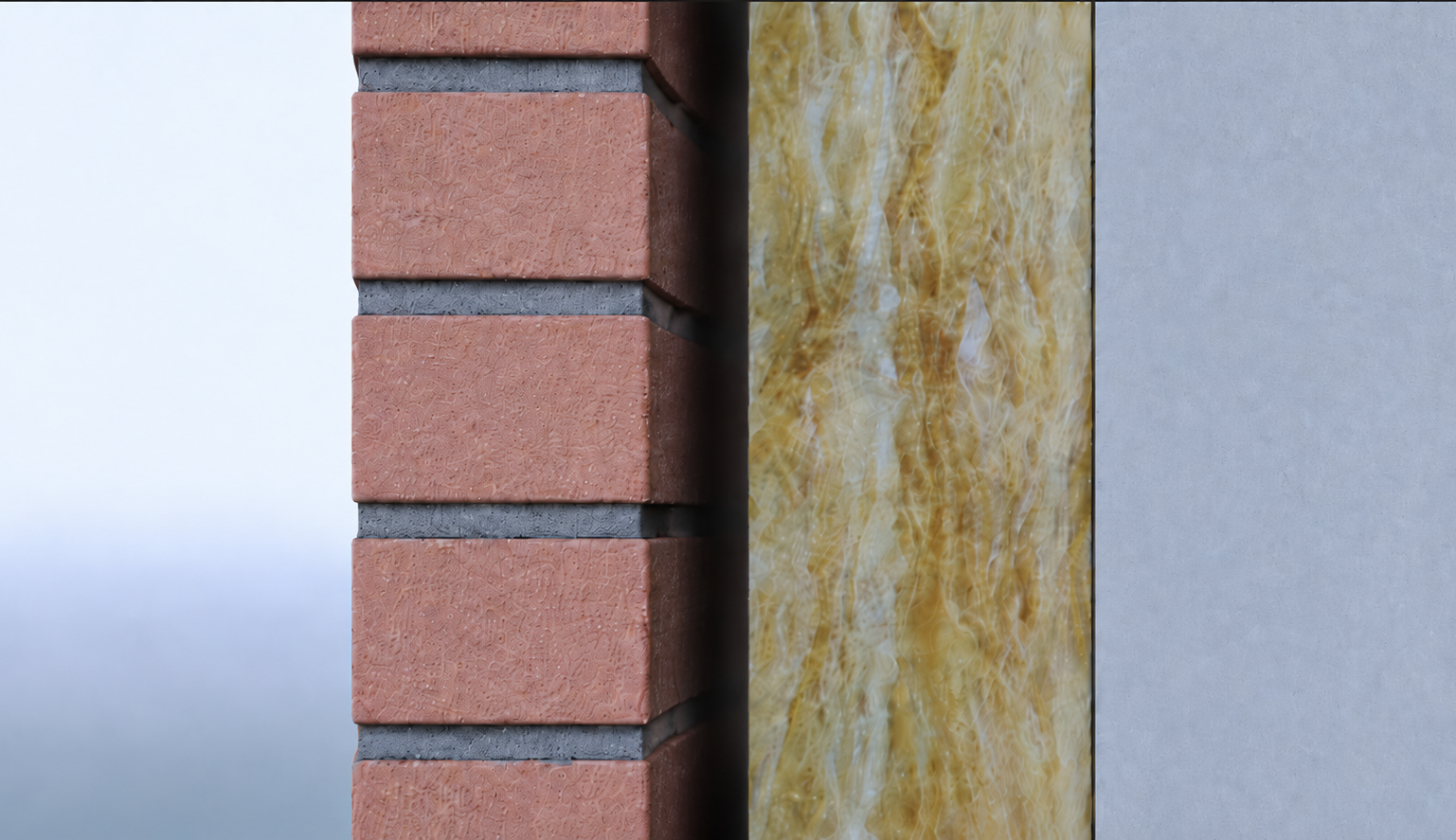
Both solutions are ventilated facade structures, but the way ventilation is implemented differs. In BRIX brick-tile cladding, the ventilation gap is an integral part of the system’s design, ensuring that its dimensions and function are controlled. In traditional masonry, the ventilation gap is part of the structure, but its practical effectiveness can be affected by how the masonry work is carried out and, for example, by mortar accumulating on the air gap side.
Ventilation helps remove moisture and dry out the structure, which improves the facade’s moisture management and supports its long service life. The brick tiles used in BRIX cladding are significantly thinner than traditional masonry bricks, allowing them to dry faster after getting wet. Faster drying reduces the time that moisture stresses the material and can thus lower the risk of deterioration caused by moisture and freezing.
One of the biggest differences is the weight of the structure.
Traditional masonry creates a heavy structure that must be taken into account in the building’s frame, foundation, and support systems. BRIX brick-tile cladding uses significantly thinner, authentic bricks, which makes the entire facade structure considerably lighter.
BRIX brick cladding weighs approximately 40 kg/m². A standard 85-mm-thick masonry brick facade typically weighs over 200 kg/m², depending on the bricks and mortar used. BRIX is therefore about five times lighter than traditional masonry.
A lighter structure doesn’t just mean less weight—it affects the entire construction project. It can simplify structural design, reduce structural loads, increase living space, and enable solutions that would be significantly more challenging with heavy, traditional masonry.
A traditional masonry facade requires a load-bearing foundation or separate support systems, the design of which must be taken into account early in the construction process.
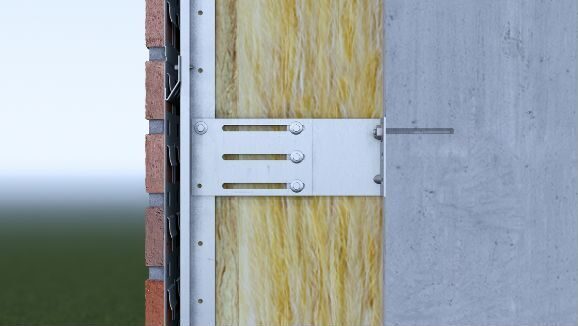
The BRIX system is attached to the building’s load-bearing frame using a metal fastening system. Thanks to its lightweight construction, it places significantly less load on the building, which allows for greater design flexibility, particularly in large and complex new construction and renovation projects.
In renovation projects, the solution can be implemented without excavation, raising the foundation, or other heavy additional structures. This reduces disruption at the construction site and also helps keep the area around the building cleaner during the work.
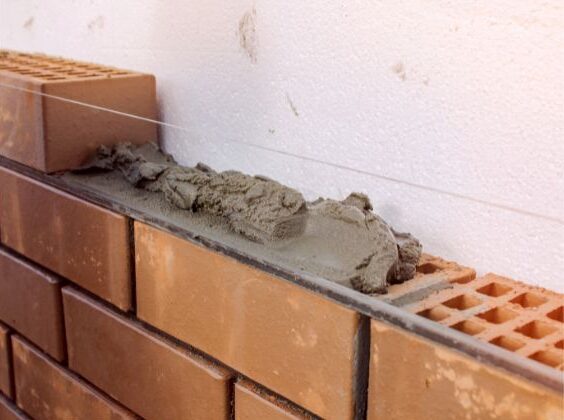
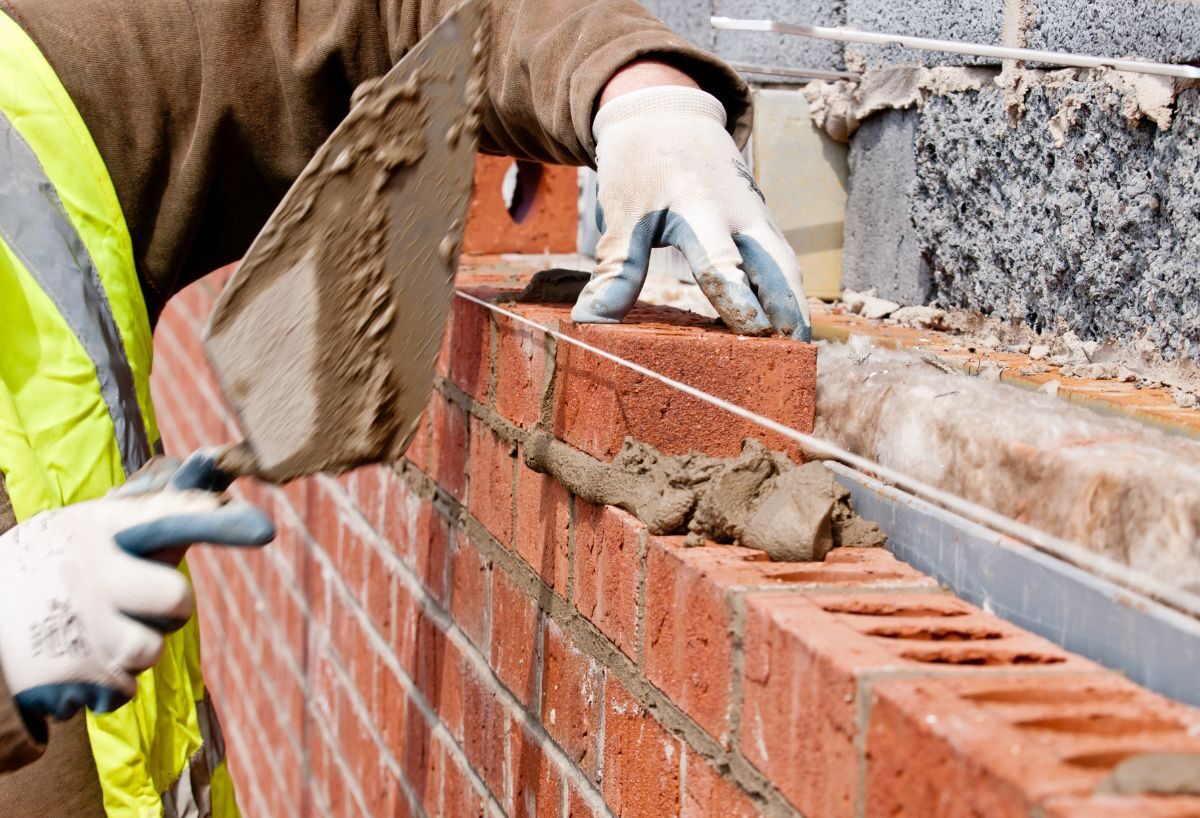
A traditional brick facade is built on-site, brick by brick. The work involves several stages, and the final result can be influenced by factors such as weather and site conditions, as well as the quality of the masonry work.
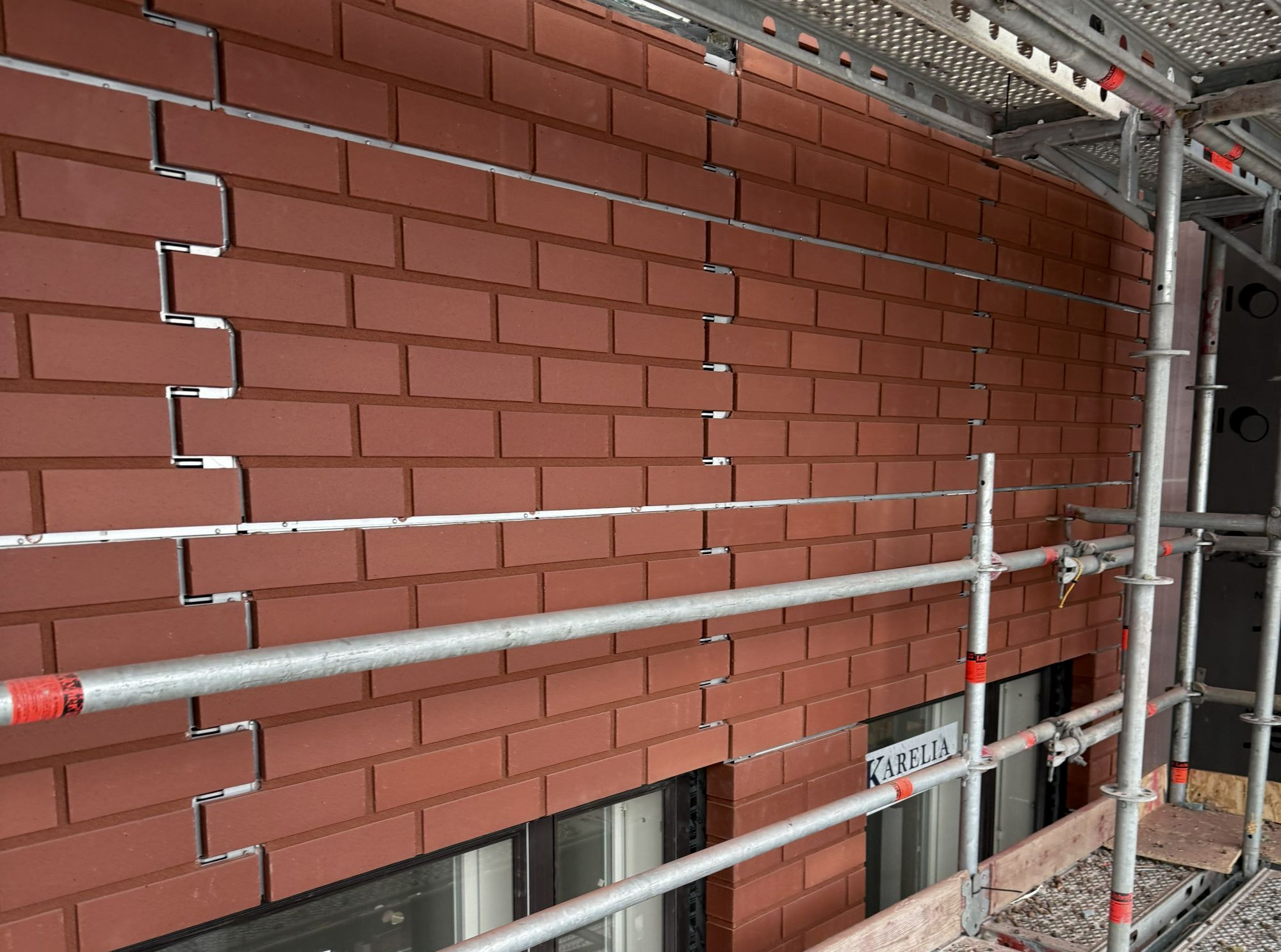
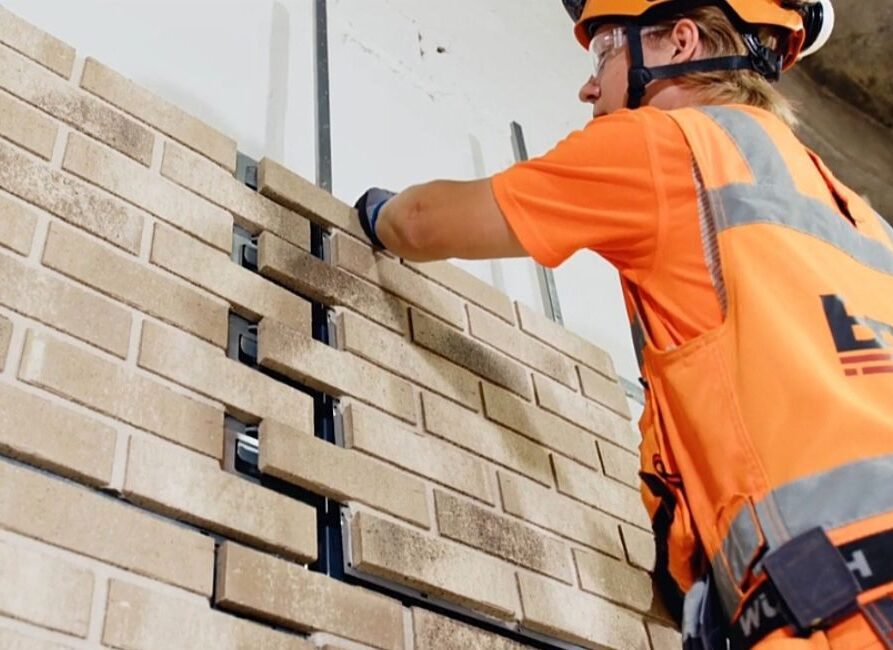
BRIX is based on factory-manufactured brick tile panels in which genuine brick tiles are pre-attached to a steel frame. Manufacturing under consistent factory conditions allows for more precise control over production quality even before the brick panel sheets are delivered to the construction site.
On the construction site, the work focuses on installing pre-made brick panel sheets. Whereas in traditional bricklaying the facade is built one brick at a time, with the BRIX brick panel, up to 32 brick panels can be installed at once. This reduces the number of work steps and speeds up the completion of the facade. A shorter installation time can also facilitate project scheduling and lower overall construction costs.
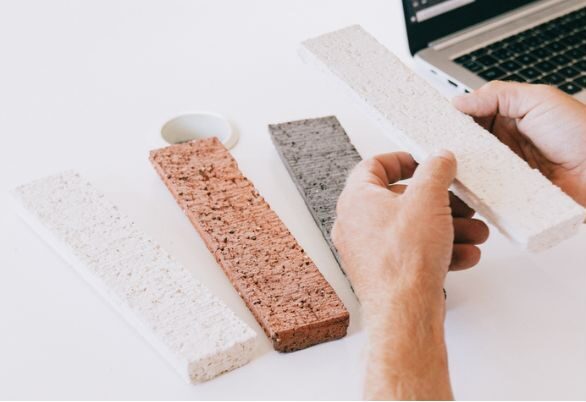
Traditional brickwork requires a considerable amount of bricks and mortar. With BRIX, the visible surface is still made of genuine fired brick, but it is constructed using significantly thinner brick tiles. This allows for the appearance of an authentic brick facade to be achieved with fewer materials and a lighter structure.
Depending on the brick factory, the same amount of thermal energy can be used to fire up to six times as many brick tiles as full-size bricks.
Lower material consumption also means less material to transport and handle on the construction site. Lighter shipments reduce the need for transportation and the resulting emissions. At the same time, construction requires fewer natural resources.
Both traditional masonry and brick tile cladding can be used to create striking and unique brick facades.
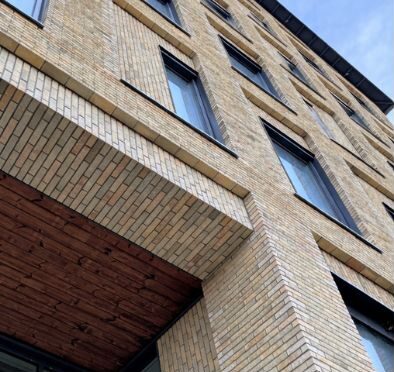
However, the lightweight nature of the BRIX system opens up new possibilities. For example, it can be used to create overhangs, suspended ceiling cladding, and other details that would be significantly more challenging to achieve with traditional masonry or would require heavier structures.
For architects, this means greater freedom to design brick surfaces even for those parts of a building where the weight and construction method of the masonry would otherwise impose limitations.
The greater mass of traditional masonry can improve a structure’s ability to absorb sound. However, sound insulation is not determined solely by the mass of the facade cladding, but rather by the performance of the entire exterior wall structure and how the various structural layers interact with one another.
In the BRIX system, the brick tiles are attached to a steel backing structure via joints, and the cladding is separated from the actual wall frame. For this reason, the difference in sound insulation between the masonry and the BRIX cladding cannot be assessed solely on the basis of their difference in mass; rather, the entire wall structure must be taken into account in the analysis.
This is also supported by an expert opinion we commissioned earlier, in which the sound insulation performance of a wall structure incorporating a lighter brick-tile cladding was assessed to be slightly better than that of the original, significantly heavier wall structure. The result was explained by the structure’s operating principle, not merely by its mass.
Brick facades are known for their exceptionally long service life, regardless of whether they are constructed using traditional masonry or brick panel cladding.
When done correctly, the effectiveness of traditional masonry has been proven over the centuries in various parts of the world. BRIX, on the other hand, utilizes the same authentic fired brick in a modern facade system that has been tested under demanding weather conditions.
Both solutions have been proven to provide a durable, low-maintenance facade.
Fill in the form and ask for more information about the possibilities and features!
